

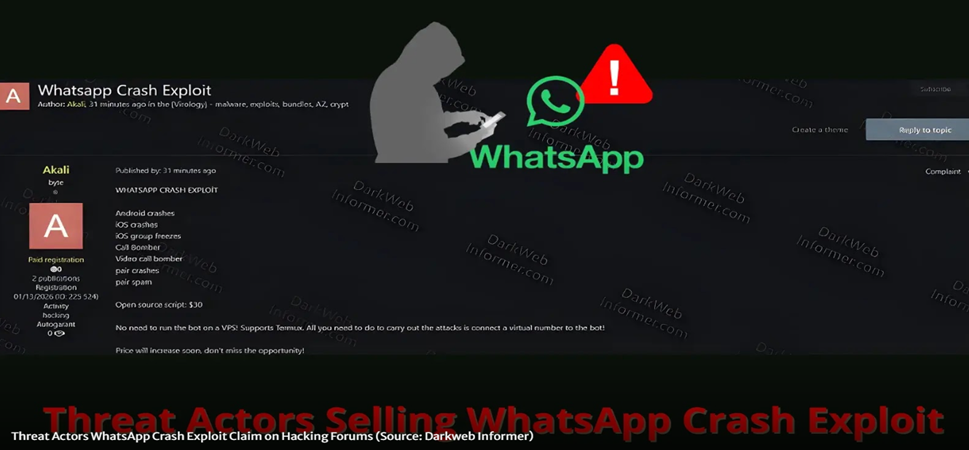
A new and disruptive exploit targeting WhatsApp has surfaced on underground hacking forums, where threat actors are openly advertising and selling a “WhatsApp Crash Exploit” for as little as $30.
According to findings reported by cybersecurity researchers, the tool is designed to force the WhatsApp application to crash on both Android and iOS devices.
Unlike conventional phishing campaigns that aim to steal login credentials or financial data, this exploit appears to focus on Denial of Service (DoS).By repeatedly triggering crashes, attackers can render the application unusable, effectively locking users out of their chats and disrupting both personal and business communications.
The Exploit
The newly discovered exploit enables attackers to sendspecially crafted messages or media files that can cause the WhatsAppapplication to crash. This can disrupt communications and potentially lead todata loss or exposure.
How Does it Work?
- Message Injection: The exploit works by sending a message containing malicious code or specially formatted content that the WhatsApp application cannot handle, leading to a crash.
- Targeted Attacks: Attackers can use this method to target specific users, creating chaos in group chats or disrupting business communications.
Implications of the Exploit
- Operational Disruption: For organizations relying on WhatsApp for internal communications, this exploit can lead to significant downtime and hinder productivity.
- Potential for Further Exploitation: While the current exploit focuses on crashing the app, it could serve as a precursor for more severe attacks, such as data theft or unauthorized access to user accounts.
- Loss of Trust: Users may lose confidence in the security of WhatsApp as a communication tool, impacting its adoption in sensitive environments.
Recommendation
For Individuals
- Be Cautious with Unsolicited Messages: Avoid opening messages from unknown contacts or suspicious sources. If you receive an unexpected message from a known contact, verify its authenticity before interacting with it.
- Disable Automatic Media Download: Adjust your WhatsApp settings to disable automatic downloads of images, videos, and documents. This can help prevent malicious files from being automatically downloaded and executed.
- Regularly Update Your App: While there is no official update addressing this exploit at the moment, ensure that your WhatsApp application is always up to date.
- Monitor App Behaviour: If you notice unusual behaviour, such as frequent crashes or performance issues with WhatsApp, consider uninstalling and reinstalling the app form legitimate source.
For Organizations
- Implement User Training: Educate employees about the risks associated with using WhatsApp, including recognizing suspicious messages and understanding the implications of the current exploit.
- Establish Communication Policies: Create guidelines for using WhatsApp in professional settings.
- Mobile Threat Defense (MTD) Deployment: Organizations should ensure that managed mobile devices have MTD solutions. Implementing monitoring solutions helps to detect unusual activity and Anomalies within the environment.
- Backup Important Data: Regularly back up critical communications and files exchanged via WhatsApp. This ensures that important information is not lost in the event of an exploit or application crash.
Meta/WhatsApp has not released an official security advisory or patch specifically addressing this exploit, There is no assigned CVE identifier. In the absence of confirmed details or an official fix, users and organisations are strongly advised to take proactive precautionary measures to minimise exposure and maintain service continuity.

.jpeg)
.jpeg)
.jpeg)

.png)


.png)
.png)